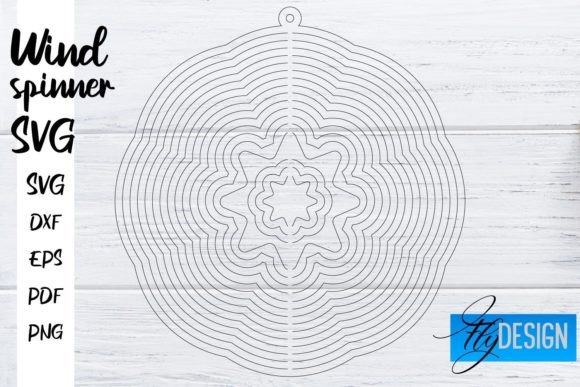
Wind Spinner SVG Funny Wind Spinner Review
As a designer who has spent years navigating the intersection of digital graphics and tangible textile art, I approach every new asset with a critical eye. When I first encountered the Wind Spinner SVG Funny Wind Spinner, my immediate reaction was to set aside the marketing buzzwords and ask a simple question: how does this translate from a screen to a stitch? While the product description highlights its utility for cutting machines like Cricut and Silhouette, my focus is on its potential as a machine embroidery design or a hybrid craft element. In the world of handmade products, the gap between a crisp vector file and a successful embroidered patch can be wide, and understanding that gap is crucial for any serious maker.
The Visual Personality and First Impressions
The Wind Spinner SVG Funny Wind Spinner carries a distinct mood right out of the gate. It is playful, slightly whimsical, and designed to catch the eye without overwhelming the viewer. For an embroidery project, this kind of visual personality is a double-edged sword. On one hand, funny, lighthearted themes are excellent for custom apparel and personalized gifts. On the other, they require careful execution to avoid looking cartoonish or cheap when stitched into fabric. The layout suggests a balance between bold shapes and potentially intricate details, which is where the real test begins for an experienced embroiderer.
When evaluating this graphic for a small shop product or an Etsy listing, I consider how the lines will hold up under tension. A design that looks perfect in a printable mockup might lose definition if the stitch density isn't managed correctly. The "funny" aspect implies a character or expression, which means the eyes, mouth, or key features must remain clear even after being covered by thread. If the original SVG relies heavily on fine lines, converting it to a fill stitch or satin stitch requires significant digitization skill to maintain clarity.
Real-World Application: From File to Finished Product
Let's imagine a specific scenario: you are preparing a batch of custom tote bags for a local craft fair. You want to feature the Wind Spinner SVG Funny Wind Spinner as the central motif. This is a high-visibility item, and customers will inspect the stitching closely. If you choose a light-colored canvas, the contrast of your thread colors becomes paramount. A dark outline using a running stitch could define the shape beautifully, while a dense fill stitch might add depth to the spinner blades.
However, if you were applying this to a sweatshirt embroidery project, the challenges shift. Sweatshirts have a heavy, textured pile that can swallow small details. Here, the Wind Spinner SVG Funny Wind Spinner needs to be scaled appropriately. If the design includes tiny lettering or delicate curves, those elements might get lost in the fabric texture unless you use a high-quality stabilizer and adjust the hoop size to ensure the fabric is taut. For baby embroidery, such as a onesie or a blanket, the softness of the design works well, but you must ensure no sharp points or loose threads could irritate sensitive skin.
In the context of commercial embroidery, consistency is key. If you are selling these as embroidered patches, the back of the patch needs to be clean, and the front needs to pop. The humor in the design can drive buyer engagement, making it a great addition to holiday embroidery collections or boutique branding. But remember, a funny design only works if the craftsmanship matches the quality expected by your clientele. A poorly executed stitch pattern can turn a charming graphic into a liability for your brand.
Navigating Fabric and Hoop Challenges
There are specific situations where the Wind Spinner SVG Funny Wind Spinner should be used with caution. Textured fabrics, such as denim or corduroy, can distort the perception of the design. Similarly, stretchy fabrics like jersey knit require a flexible backing and careful hooping to prevent puckering. If you attempt to place this design on a curved surface, like a cap, the distortion of the image during the digitizing process must be accounted for. What looks round on a flat screen may appear warped on a structured hat panel.
Dense stitch areas are another concern. If the design is filled entirely with satin stitches, the result can be stiff and uncomfortable against the skin, which is undesirable for custom apparel. Instead, a mix of fill stitch and running stitch often yields a softer, more professional finish. Additionally, thin fabrics risk tearing under the weight of heavy embroidery, so using a tear-away or cut-away stabilizer is non-negotiable. Always check whether the design works for both personal and commercial projects before committing to a large run.
Practical Designer Notes for Success
Before you commit the Wind Spinner SVG Funny Wind Spinner to a final garment, follow these practical steps to ensure a high-quality finished product:
- Test on Scrap Fabric: Never skip the test run. Stitch the design on a scrap piece of the same fabric you intend to use. Check for puckering, skipped stitches, or misaligned layers.
- Check Thread Color Contrast: Ensure the thread colors stand out against the background. A low-contrast design can look muddy, especially on dark fabric.
- Review Stitch Density: Adjust the density settings in your software. Too dense, and the fabric bunches; too loose, and the background shows through.
- Confirm Hoop Size: Make sure the design fits comfortably within your hoop with enough margin for the stabilizer to grip the edges securely.
- Inspect Small Details: Zoom in on the smallest elements of the graphic. If they are too small to stitch clearly, simplify them or remove them entirely.
- Use Proper Stabilizer: Choose the right type of stabilizer for your fabric. Heavyweight items need cut-away, while lighter items might do well with tear-away.
- Verify Licensing: Since this is a digital product, confirm the license terms before selling finished items. Ensure you have the right to use it for commercial embroidery projects.
For those transitioning from cutting machines to embroidery, remember that an SVG file intended for a Cricut or Silhouette is not automatically an embroidery file. You will likely need to convert the vector paths into stitch data using digitizing software. This conversion process is where the magic happens, turning a static graphic into a dynamic, tactile piece of art.
Final Thoughts on Value and Presentation
Ultimately, the Wind Spinner SVG Funny Wind Spinner offers a versatile foundation for creative entrepreneurs and hobbyists alike. Its appeal lies in its ability to bring a smile to a customer's face, whether it's on a kitchen towel, a pillow cover, or a personalized gift. However, the true value of the design comes from how well you execute it. By paying attention to stitch clarity, fabric compatibility, and professional presentation, you can elevate a simple graphic into a standout handmade product.
Whether you are an Etsy seller looking to expand your catalog or a small business owner creating unique merchandise, taking the time to evaluate and test your designs is what separates a good craft business from a great one. Use this asset wisely, respect the limitations of your materials, and let your creativity shine through the thread. With the right approach, this design can become a staple in your collection of design assets, bringing joy and quality to every project you undertake.