Hangry Funny Definition SVG: A Designer's Review
As a designer who has spent years translating digital files into tangible stitched goods, I approach every new asset with a mix of excitement and skepticism. The market is flooded with Graphics that look stunning on a screen but fall apart under the needle. Today, I am putting the Hangry Funny Definition SVG through its paces to see if it holds up as a viable machine embroidery design for real-world projects. This isn't just about whether the file opens in your software; it is about how this specific concept translates from a vector line to a finished product that customers will actually want to wear or display.
First Impressions: Visual Personality and Mood
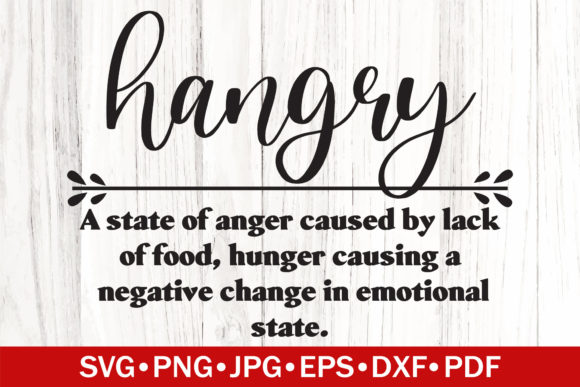
When I first opened the Hangry Funny Definition SVG, the immediate reaction was one of amusement mixed with practical assessment. The concept plays on the universally relatable feeling of being "hangry"—a blend of hungry and angry. In the world of custom apparel and home decor, humor sells, but it must be executed with clarity. The layout of this design feels balanced, avoiding the cluttered aesthetic that plagues many trendy Crafts assets. The typography appears bold enough to read from a distance, which is crucial for items like tote bags or sweatshirts where legibility defines the value of the piece.
The visual personality is casual and witty, making it an excellent candidate for personalized gifts or small shop merchandise. It does not feel overly formal, which means it fits perfectly into the category of everyday wearables. However, the true test lies in how the shapes interact with different stitch types. For a definition-style graphic, you often rely heavily on fill stitches for the background elements and satin stitches for the lettering. If the kerning is too tight or the angles too sharp, the stitch density can cause puckering, ruining the professional look of the finished product.
Real-World Application: From Screen to Fabric
Let's imagine a specific scenario: You are preparing a batch of custom embroidered aprons for a local bakery or a holiday gift run for foodies. You decide to use the Hangry Funny Definition SVG on a heavy cotton canvas. In this context, the design shines. The sturdy fabric provides a stable base, allowing the needle to penetrate cleanly without distortion. The bold lines of the definition text would likely translate well into a dense fill stitch, creating a solid block of color that stands out against the neutral background of the apron.
Now, consider a different application: a baby onesie or a delicate tea towel. Here, the Hangry Funny Definition SVG requires more caution. If the design includes fine details or very small text within the definition, shrinking it down to fit a small hoop might result in muddy stitching. In my experience, text smaller than 0.2 inches often loses its crispness when converted to a digital embroidery file. For baby embroidery or lightweight kitchen linens, you would need to ensure the design is scaled appropriately and backed with a high-quality stabilizer to prevent the fabric from gathering around the dense areas.
This design also works exceptionally well for embroidered patches. The defined edges of the text and any accompanying graphics make it easy to create a clean merrow border or a felt backing. Patches allow you to use thicker threads and higher densities without worrying about the integrity of the garment itself. Whether you are selling these as standalone handmade products on Etsy or offering them as add-ons for a larger order, the patch format maximizes the impact of the Hangry Funny Definition SVG.
Navigating Challenges: Fabric and Technique
While the design is versatile, there are specific situations where you must exercise care. Textured fabrics, such as fleece or thick wool blends used for winter sweatshirt embroidery, can sometimes swallow fine details. If the Hangry Funny Definition SVG contains intricate curves or tiny serifs, they may get lost in the nap of the fabric. Always test the design on a scrap piece of your intended material before committing to a client project.
Stretchy fabrics present another challenge. When embroidering on knits, the tension of the running stitch or fill stitch can distort the shape of the letters. To mitigate this, using a cutaway stabilizer is non-negotiable. Additionally, dark fabrics require careful consideration of thread colors. A white outline or a light-colored fill might show bleed-through if the stabilizer is insufficient. Conversely, on light fabrics, ensure the contrast is high enough to maintain readability. A low-contrast version of this funny definition might look like a mistake rather than a stylistic choice.
Curved surfaces, such as caps or hats, demand a specialized setup. The Hoop size becomes critical here. If the design is too wide for a cap hoop, you risk misalignment between the front and back panels. Before attempting a commercial embroidery run on headwear, mock up the placement digitally to ensure the text sits flat and readable on the curve.
Business Value and Professional Presentation
For the Etsy seller or the owner of a boutique craft business, the Hangry Funny Definition SVG offers a unique opportunity to stand out. Humor is a powerful driver for sales, especially in the holiday embroidery season or for personalized gifts. However, the perceived value of your item depends entirely on the quality of the execution. A sloppy stitch job can turn a great joke into a cheap-looking trinket.
To maximize buyer engagement, ensure your printable mockup accurately represents the final stitch quality. Customers cannot feel the texture through a screen, so your photos must convey professionalism. Show close-ups of the thread work to highlight the precision of the satine stitch and the evenness of the fill. This builds trust and justifies a higher price point for your small shop product.
Furthermore, consistency is key for brand building. If you use this design across multiple product lines—tote bags, pillows, and shirts—ensure the scale and thread palette remain consistent. This creates a cohesive collection that encourages repeat purchases. The Hangry Funny Definition SVG can serve as a signature element in your catalog, provided it is treated with the respect it deserves as a design asset.
Practical Designer Notes for Success
Before you finalize your project, follow these essential steps to ensure the best results:
- Test on Scrap Fabric: Never skip this step. Run the Hangry Funny Definition SVG on a scrap piece of the exact fabric you plan to use. Check for puckering, skipped stitches, or thread breakage.
- Check Thread Contrast: Ensure the chosen thread colors pop against the background. High contrast improves readability and visual appeal.
- Review Stitch Density: If the design looks too dense in the preview, reduce the density settings in your software to prevent fabric distortion.
- Confirm Hoop Size: Verify that the design fits comfortably within your hoop with adequate margins for stabilization.
- Inspect Small Details: Zoom in on the smallest text or lines. If they appear too thin, increase the line weight slightly to ensure they stitch clearly.
- Use Proper Stabilizer: Match the stabilizer type (tear-away, cut-away, or wash-away) to the fabric weight and stretchiness.
- Licensing Check: Confirm the licensing terms before selling finished products or reselling the digital embroidery file. Ensure you have the right to use the design for commercial purposes.
The Hangry Funny Definition SVG is a fun and engaging asset that, when handled correctly, can elevate your craft business offerings. By understanding its strengths and limitations, you can create high-quality, humorous, and professional pieces that resonate with your audience. Whether you are making a single personalized gift or launching a full line of custom apparel, thoughtful preparation is the secret to turning a simple graphic into a standout masterpiece.